

Discover the Many Faces of Shivamogga
Nature • Adventure • Heritage • Culture
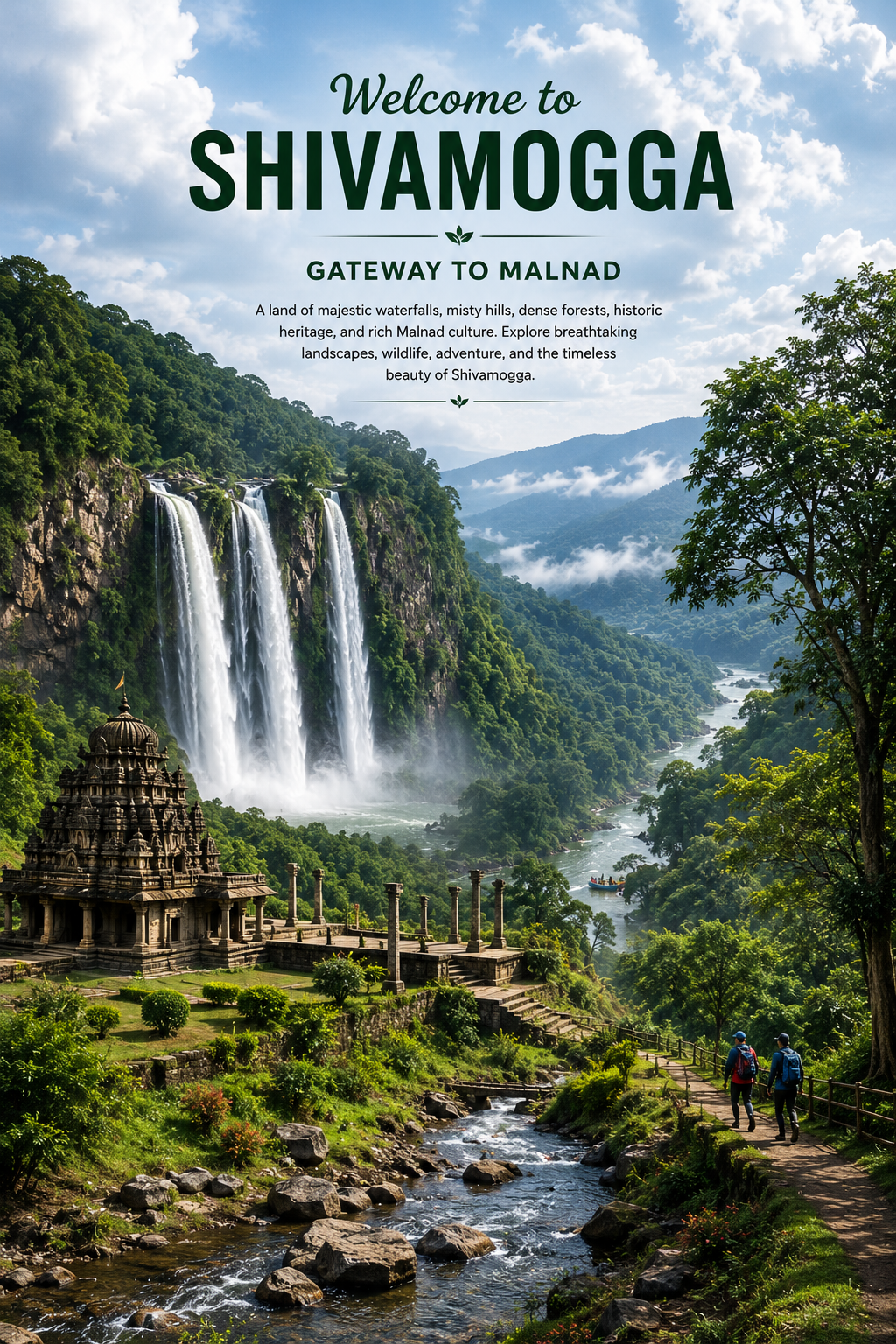
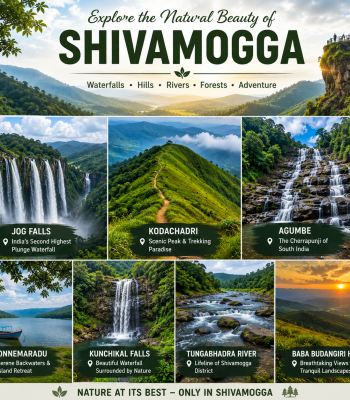
Shivamogga, popularly known as the Gateway to Malnad, is a captivating destination in Karnataka where nature, history, culture and adventure come together. Blessed with the lush landscapes of the Western Ghats, the district features spectacular waterfalls, mist-covered hills, dense forests, rivers, reservoirs, wildlife habitats and scenic coffee plantations. The mighty Jog Falls, the serene hills of Kodachadri, the rainforest landscapes of Agumbe, and the tranquil waters of Honnemaradu are among its major natural attractions.
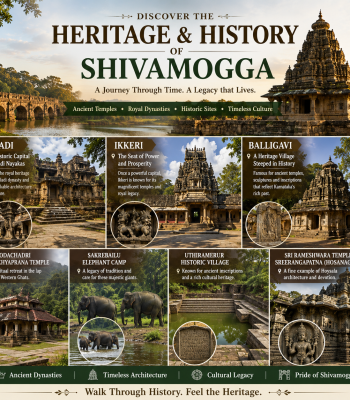
Beyond its natural beauty, Shivamogga has a remarkable historical and cultural heritage shaped by dynasties such as the Chalukyas, Hoysalas, Vijayanagara Empire and particularly the Keladi Nayakas. Historic destinations such as Keladi, Ikkeri and Balligavi offer visitors an opportunity to explore ancient temples, architecture, sculptures and stories from Karnataka’s past. Wildlife and eco-tourism destinations such as Tyavarekoppa Lion and Tiger Reserve, Sakrebailu Elephant Camp and Mandagadde Bird Sanctuary further add to the district’s tourism diversity.
Shivamogga also provides opportunities for trekking, camping, nature walks, photography, wildlife experiences, river activities and plantation visits, making it suitable for both adventure seekers and travellers looking for a peaceful escape. The district’s traditional Malnad cuisine, festivals, local markets and warm rural culture provide an authentic experience beyond sightseeing. With attractions spread across forests, hills, rivers and historic towns, Shivamogga offers visitors the opportunity to experience the natural beauty, cultural richness and historical legacy of Karnataka in one destination.


Taste of Malnad
Authentic Flavours, Traditional Recipes & Local Culinary Heritage





Coffee & Plantation Tourism – A Living Malnad Experience
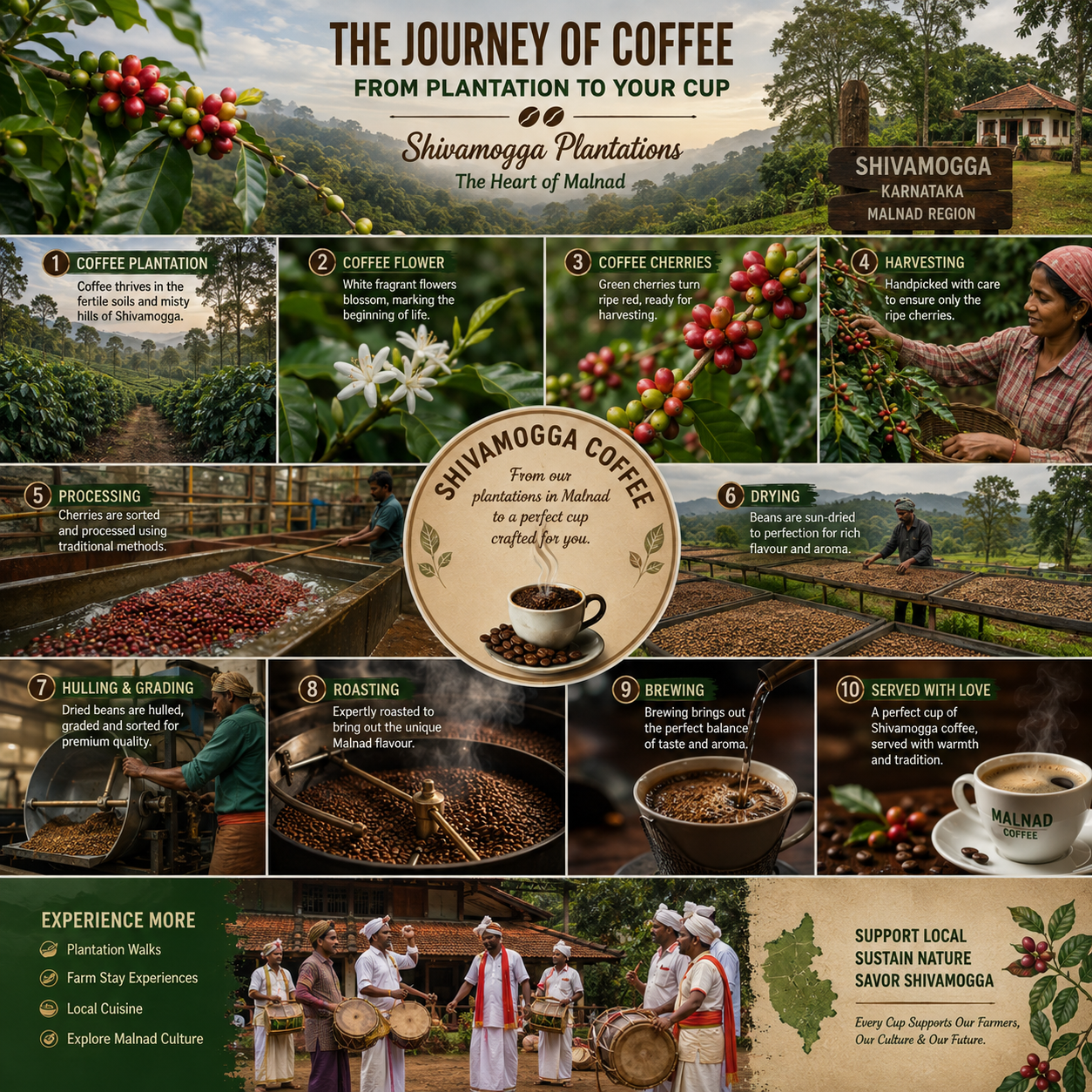
Shivamogga’s lush Malnad landscape, fertile soil and cool, rainfall-rich climate provide ideal conditions for coffee, arecanut, pepper, banana, coconut and other plantation crops. The plantation regions around Agumbe, Thirthahalli, Hosanagara and Sagara offer visitors a chance to experience the peaceful beauty of green estates surrounded by forests, hills and streams. Coffee plantations are especially attractive during the flowering and harvesting seasons, when visitors can learn about cultivation, processing and the journey from coffee bean to cup.
Plantation tourism provides an opportunity to experience the rural lifestyle and agricultural traditions of Malnad while enjoying nature away from busy urban areas. Visitors can explore plantation trails, interact with local growers, experience traditional farming practices, enjoy freshly prepared local food and relax in homestays surrounded by greenery. Combining coffee, spices, forests and village culture, plantation tourism adds a distinctive dimension to Shivamogga’s tourism experience and also supports local farmers, homestay owners and rural communities.Beyond coffee production, Shivamogga’s plantations offer visitors a chance to experience the rhythm of rural Malnad life. Walking through shaded coffee estates, visitors can witness seasonal flowering and harvesting, learn about traditional and modern farming practices, explore nearby spice and arecanut plantations, and enjoy the sounds and scenery of the Western Ghats. Many plantation areas are surrounded by streams, forests, misty hills and village settlements, making them ideal for peaceful nature walks, photography and farm-based experiences. Plantation tourism also helps connect travellers with local farmers and communities, creating additional rural livelihoods while encouraging the conservation of Shivamogga’s unique agricultural and natural heritage.

Festivals & Traditions of Shivamogga
Shivamogga’s festivals and cultural traditions reflect the rich Malnad heritage, religious practices and community life of the district. Temple festivals, village fairs, cultural programmes and seasonal celebrations bring together people from different communities and provide visitors with an opportunity to experience the region beyond its natural attractions. Traditional music, folk performances, processions, rituals, decorations and local food form an important part of these celebrations. Major temple events and jatre (village fairs) held across Shivamogga attract devotees and visitors while preserving age-old customs and traditions.
The district’s cultural experience is closely connected with its historic temples, villages, traditional arts and Malnad lifestyle. Visitors can explore local markets, participate in cultural programmes, taste traditional cuisine and experience the warmth of rural communities during festival seasons. Events associated with important temples and heritage locations such as Keladi, Ikkeri and Shivamogga city showcase the district’s architectural and cultural legacy. These celebrations not only provide memorable experiences for tourists but also support local artisans, performers, vendors and small businesses, helping preserve Shivamogga’s distinctive cultural identity for future generations.
🌿 Responsible Tourism
Help protect Shivamogga's forests, waterfalls, wildlife, heritage and local communities by travelling responsibly and respecting the natural beauty of the district.
Keep Tourist Places Clean
Avoid littering and carry waste with you. Use designated waste bins and help keep Shivamogga's natural attractions clean.
Protect Nature
Do not damage trees, plants or natural habitats. Stay on designated paths while visiting forests, hills and other natural attractions.
Respect Wildlife
Maintain a safe distance from wildlife. Never feed animals, disturb them or enter restricted forest areas.
Follow Waterfall Safety
Follow safety instructions near waterfalls, rivers and streams. Avoid entering water during heavy rainfall or strong currents.
Respect Local Culture
Respect local traditions, temples, communities and cultural practices while exploring Shivamogga's heritage.
Support Local Communities
Choose local guides, homestays, handicrafts, restaurants and locally produced goods to support communities and local livelihoods.
Reduce Plastic Use
Carry reusable water bottles and bags. Avoid single-use plastics, especially while visiting forests and natural attractions.
Travel Responsibly
Follow instructions from local authorities, forest officials and tourism personnel, especially during monsoon and emergencies.
Leave No Trace
Leave natural and heritage locations as you found them. Avoid carving, writing on monuments or disturbing the surroundings.
🌿 Travel with Care. Leave a Positive Footprint.
Every visitor can help preserve Shivamogga's forests, waterfalls, wildlife, heritage and culture for future generations.